How Often Should You Clean Your Office?
The right cleaning frequency depends on how many people use the space daily and what kind of work happens there. A single-occupant office suite needs something very different to a 30-person open-plan floor. As a starting point: offices with fewer than five staff can often manage with once-weekly professional cleaning supplemented by daily wipe-downs. Offices with five to fifteen staff typically benefit from two to three professional visits per week. Larger offices, or those with a kitchen, bathroom facilities, or a reception area that sees client traffic, generally require daily cleaning. Industries with heightened hygiene requirements — medical, dental, food service — often need cleaning after every session or at minimum daily.
What to Look for in an Office Cleaning Contractor
Choosing a commercial cleaning provider involves more than comparing hourly rates. Key things to assess include: whether the same cleaner attends each time (consistency matters for results), whether staff are police-checked and insured, whether the contractor carries public liability insurance and can provide a certificate, and whether they have experience in your specific office type. References or case studies from similar businesses in your industry are useful. Avoid providers who cannot clearly articulate their scope of work, charge excessive lock-in contracts, or cannot provide written confirmation of their insurance cover.
Office Cleaning Costs in Sydney
Professional office cleaning in Sydney typically costs between $30 and $45 per hour for standard daytime service. After-hours and before-hours cleaning — which requires staff working outside normal business hours and managing building access independently — generally ranges from $45 to $75 per hour. Small offices under 100 square metres usually pay between $120 and $250 per clean for a weekly service. Larger commercial tenancies are often priced on a fixed weekly or monthly rate after a scope-of-work assessment. Prices vary based on office type, frequency, time of day, and additional services such as carpet cleaning or window washing.
What’s Included in a Standard Office Clean
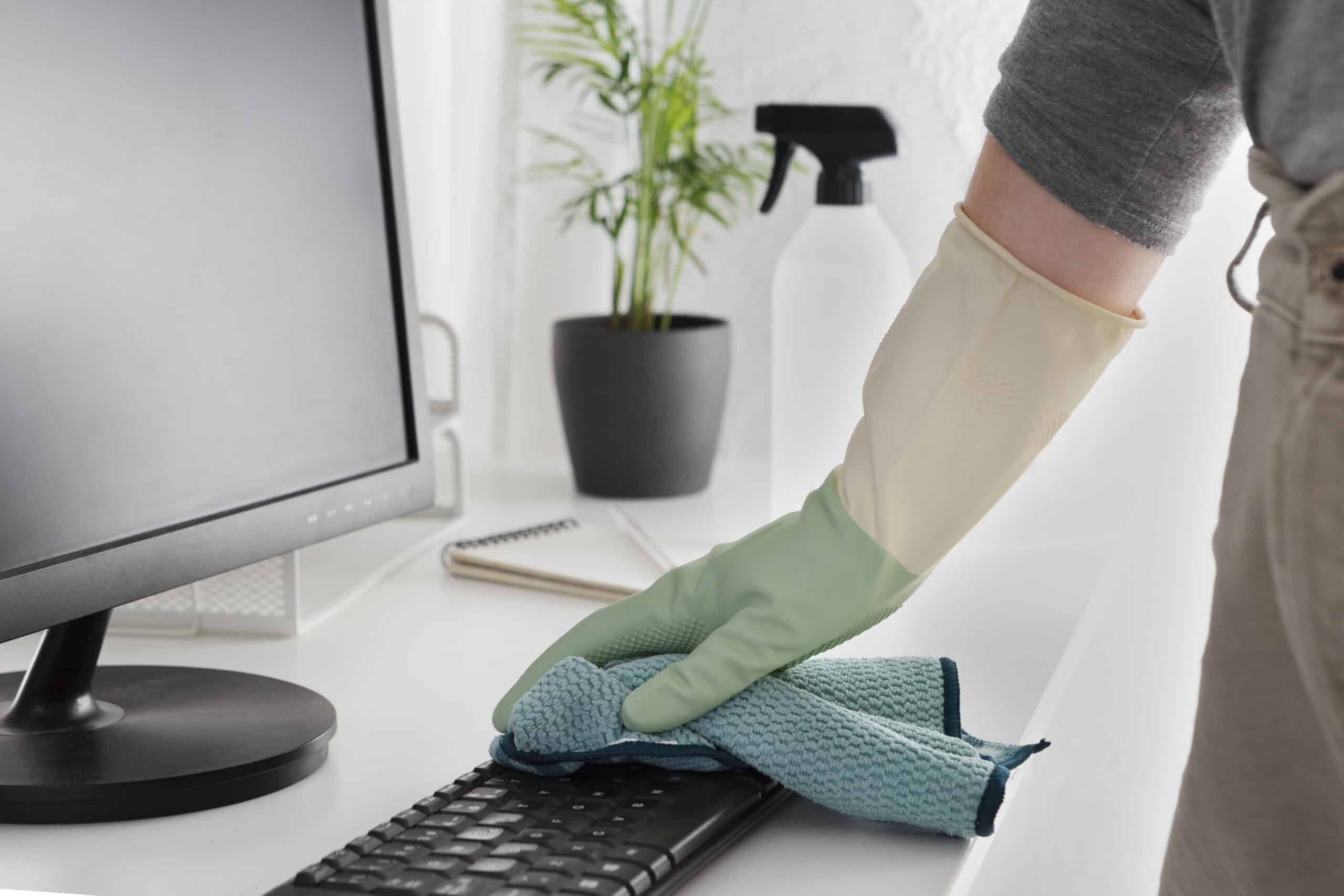
A professional office cleaning service should cover, at minimum: all floors (vacuumed and mopped), all bathroom and kitchen areas, bin emptying and relining, wipe-down of desk and workstation surfaces, sanitisation of high-touch points (handles, switches, shared equipment controls), cleaning of internal glass and partitions, and attention to meeting rooms and reception. Some contractors include additional items as standard; others charge separately. When comparing quotes, compare the scope of work line by line rather than the total price alone — a lower-priced service that skips kitchens or bathrooms is not equivalent to a comprehensive clean.
Before-Hours vs After-Hours Office Cleaning
Most businesses opt for after-hours cleaning, which means the cleaning team arrives after the last employee leaves and completes the work before the next working day. This is typically the 5:30pm to 10:00pm window. Before-hours cleaning works in reverse — the team arrives at 5:00am or 6:00am and completes the work before the first staff member arrives at 8:30am or 9:00am. Both approaches result in a clean, fresh office for the start of the working day. Before-hours cleaning is preferred by some businesses where the evening hours are still in active use, or where building access is easier in the early morning. Weekend cleaning is a third option for five-day-per-week operations.
Deep Cleaning vs Routine Cleaning
Routine office cleaning covers the regular tasks that keep a workspace presentable from one working day to the next: floors, surfaces, bathrooms, kitchens, and bins. A deep clean addresses the areas that are not reached or fully reset during a routine visit. This typically includes carpet steam cleaning, upholstery cleaning on chairs and lounges, descaling of bathroom fixtures, cleaning inside appliances, detailed treatment of skirting boards and ceiling vents, and thorough stain removal from hard floors. Most professional office environments benefit from a deep clean two to four times per year, with the routine service maintaining the baseline in between. End-of-tenancy or move-in deep cleans are also common requests from businesses changing premises.